



If your pre-settlement funding application is denied, it is essential to determine why as soon as possible. Your attorney can help clarify the reason, whether it’s due to case-specific issues such as missing documentation or contested liability, or because your state restricts or prohibits this type of funding. With their help, you may be able to resolve the issue, reapply, or seek funding from another provider. In some cases, submitting additional evidence or clarifying details may change the outcome.
Common Reasons for Funding Denials
Pre-settlement funding, also known as legal funding, is a non-recourse advance. This means that if the case does not result in a settlement or a favorable verdict, the funds do not have to be repaid. Because the funding company assumes the financial risk, it must conduct thorough due diligence before approving your application. This process requires active involvement from your attorney from the outset.
After consulting with them, the funding company will evaluate three key factors: the overall strength of your case, the clarity of the defendant’s liability, and the estimated value of a potential settlement or judgment.
As noted, funding companies assess risk carefully, and several factors can lead to a denial, including:
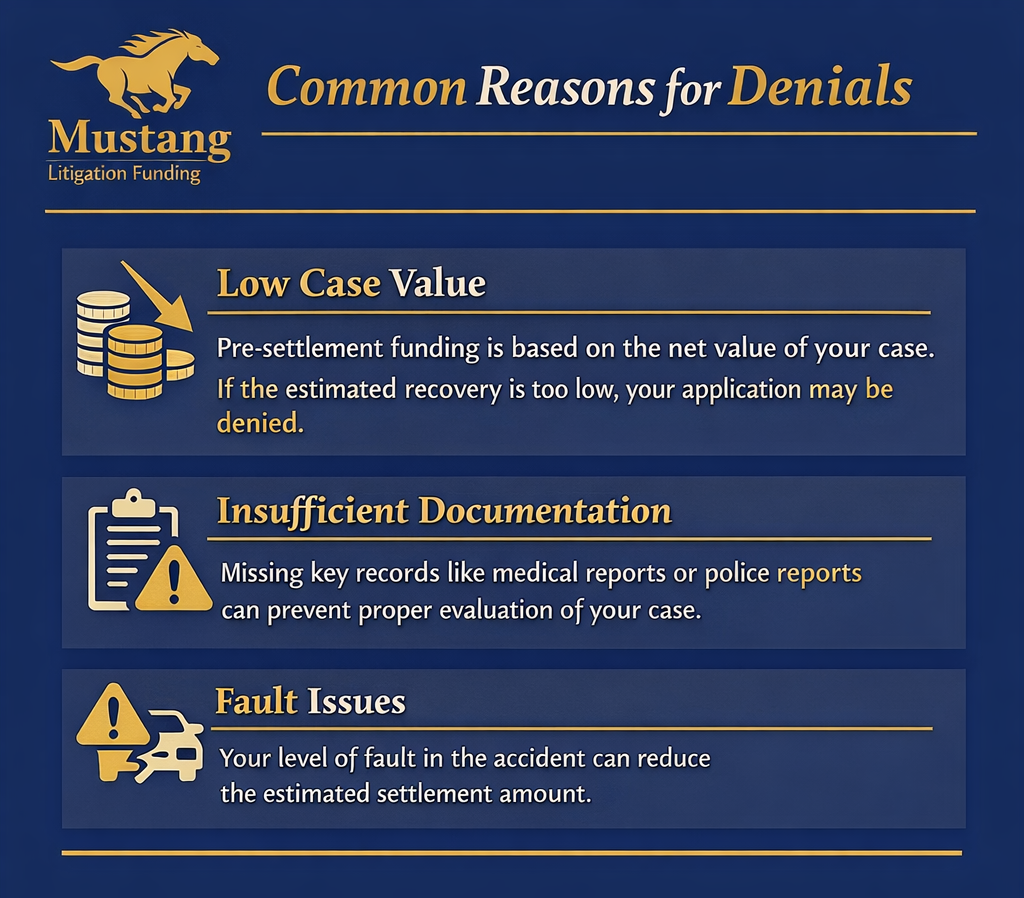
- Low case value: Pre-settlement funding is based on the estimated net value of your case, i.e., the portion likely to remain after attorney fees, medical liens, and other deductions. If that projected amount falls below the funding company’s minimum threshold, your application may be denied.
- Insufficient documentation: If your application lacks key documentation, the funding company may be unable to properly evaluate the strength of your case. This often occurs when your attorney has not yet provided sufficient records, such as medical reports, police reports, or clear evidence of liability. Review the application with your lawyer to identify any gaps and ensure that all critical evidence is included in any future submission.
- Fault issues: While most states allow plaintiffs to recover damages even if they are partially at fault, any settlement is reduced by that percentage under comparative negligence rules. For example, if you are found 30% at fault, your total recovery would be reduced by 30%, which may lower the net case value enough to fall below the funding company’s approval threshold.
Speak to a Pre-Settlement Funding Expert Today
Pre-Settlement Funding Laws vary by State
Pre-settlement funding laws vary by state, and some jurisdictions do not permit it. In other cases, the funding company you applied to may not be licensed or authorized to operate in your state, even if it advertises nationally.
If your application was denied for this reason, you and your attorney could consider working with a funding company that is properly licensed to conduct business in your jurisdiction. With the right guidance and a strong case, funding may still be possible.
Contact Mustang Funding Today
If you would like more information about pre-settlement funding and whether your case qualifies, contact Mustang Funding today. Our team members are always within reach and ready to talk whenever your funding needs arise. Learn more from our ultimate guide to pre-settlement funding.
“Our innovative and flexible litigation funding solutions ensure that no one is denied their right to a fair legal battle due to financial constraints.” – Mustang Litigation Funding
